
Why Sleep Matters for Weight Loss
When people think about weight loss, the conversation almost always centers on diet and exercise. Eat less. Move more. Burn more calories than you consume. While those factors matter, this traditional “calories in, calories out” model leaves out several critical drivers of metabolic health.
Increasingly, research shows that what you eat, how your body processes it, and how well you sleep play a far greater role in weight regulation than calorie math alone. Sleep, in particular, is emerging as one of the most underappreciated and most powerful factors influencing metabolism, hormone balance, and long-term weight management.
Sleep is not passive rest. It is an active biological process that helps regulate blood sugar, insulin, appetite hormones, fat storage, and energy use. When sleep is compromised, these systems fall out of balance, making weight loss significantly more difficult and weight regain more likely.
Weight Loss Is More Than Calories In, Calories Out
The idea that simply eating fewer calories leads to lasting weight loss is incomplete. It fails to account for the hormonal responses that determine whether food is burned for energy or stored as fat.
One of the most important hormones in this process is insulin. Insulin regulates blood glucose by moving sugar from the bloodstream into cells to be used or stored. When insulin levels are elevated, the body is in storage mode. When insulin levels fall (between meals and overnight) the body can access stored energy, including fat.
A key concept often missed:
The body cannot efficiently burn fat while insulin levels are high.
Diets high in refined carbohydrates and sugars raise insulin, but so do other factors, most notably, poor or inadequate sleep.
How Sleep Impacts Glucose, Insulin, and Metabolism
A growing body of research shows that even short-term sleep deprivation can significantly impair glucose metabolism.
Just a few nights of insufficient sleep can:
Raise fasting blood glucose
Reduce insulin sensitivity
Increase circulating insulin levels
This means the body must produce more insulin to manage the same amount of glucose, pushing metabolism toward fat storage rather than fat burning.
One major contributor is the loss of slow-wave (deep) sleep, the most restorative phase of non-REM sleep. During deep sleep:
Growth hormone is released
Sympathetic nervous system activity decreases
Brain glucose use declines
Metabolic repair and fat utilization are supported
Studies show that suppressing deep sleep, without even reducing total sleep time, can reduce insulin sensitivity to levels seen in older adults with impaired glucose tolerance. The greater the loss of deep sleep, the greater the decline in metabolic function.
Sleep deprivation also increases inflammation and stress signaling, further worsening insulin resistance and blood sugar control.
Sleep Affects What Fuel Your Body Uses
Sleep doesn’t just influence how much weight you lose, it affects what kind of weight you lose.
Research comparing calorie-restricted diets has found:
Short sleepers lose more lean (non-fat) mass and less fat
Adequate sleepers lose more fat while preserving muscle
Short sleep increases levels of ghrelin, a hunger-promoting hormone that also encourages fat retention and glucose production by the liver. Lack of sleep may shift the body toward breaking down protein for glucose instead of using fat for fuel, undermining metabolic efficiency and body composition.
This helps explain why people can follow a calorie-controlled plan yet see minimal fat loss, or feel weaker and more depleted when sleep is insufficient.
Sleep, Appetite, and Food Choices
Poor sleep profoundly alters eating behavior. Studies consistently show that people who sleep less:
Feel hungrier
Eat 200–300 more calories per day on average
Crave more sugary, salty, and ultra-processed foods
This is not a failure of willpower. Sleep deprivation reduces activity in brain regions responsible for impulse control and increases activity in reward centers that amplify food desirability. In other words, the brain becomes wired to seek quick energy when it’s tired, even when true hunger hasn’t increased.
Sleep loss also increases ghrelin and reduces leptin, the hormone that signals fullness, further driving overeating.
Late-Night Eating: A Hidden Barrier to Weight Loss
Another way poor sleep and circadian disruption interfere with weight loss is through late-night eating and snacking.
As evening approaches, the body naturally shifts out of “feeding mode.” Insulin sensitivity declines, while melatonin, the hormone that prepares the body for sleep, begins to rise. This creates a metabolic environment that is less capable of handling glucose efficiently.
When food, especially carbohydrates or sugary snacks, are eaten late at night:
Blood glucose rises
Insulin must increase to manage that glucose
More insulin is required because nighttime insulin sensitivity is lower
Fat burning is suppressed and fat storage is promoted
Elevated insulin at night also interferes with the normal overnight fasting state that supports metabolic repair and fat utilization during sleep.
Research shows that people who sleep less or go to bed later tend to consume a disproportionate amount of their daily calories after dinner. These late calories are associated with poorer blood sugar control, increased cravings, and greater accumulation of abdominal (visceral) fat, even when total calorie intake is similar.
From a metabolic perspective, when you eat matters almost as much as what you eat. Finishing meals at least 2–3 hours before bedtime allows insulin levels to fall and aligns eating patterns with the body’s circadian rhythm, supporting more effective fat loss.
Other Hormonal and Metabolic Changes Influenced by Sleep
Sleep affects many hormones involved in weight regulation:
Cortisol: Sleep deprivation raises cortisol, increasing blood sugar and promoting fat storage
Growth hormone: Released during deep sleep; supports fat breakdown and tissue repair
Leptin: Signals satiety; levels drop with insufficient sleep
Ghrelin: Stimulates hunger and cravings; rises with short sleep
Chronic sleep loss disrupts the balance of these systems, creating a hormonal environment that favors weight gain rather than weight loss.
How to Improve Sleep to Support Weight Loss
Sleep is a biological necessity, but quality sleep is also a learned behaviour. Supporting sleep hygiene can have a meaningful impact on metabolic health.
Foundational strategies include:
Aim for at least 7–8 hours of sleep per night
Maintain consistent bedtimes and wake times
Finish eating 2–3 hours before bedtime
Limit caffeine, alcohol, refined sugars, and late heavy meals
Get morning sunlight and dim lights in the evening
Avoid intense exercise right before bed
Create a cool, dark, quiet sleep environment
Use calming practices (journaling, breathwork, meditation) to quiet the mind
If sleep remains unrefreshing or disrupted, especially with snoring, gasping, or frequent awakenings, then working with a sleep professional is essential. Sleep disorders such as obstructive sleep apnea can significantly worsen metabolic health and create a vicious cycle of weight gain.
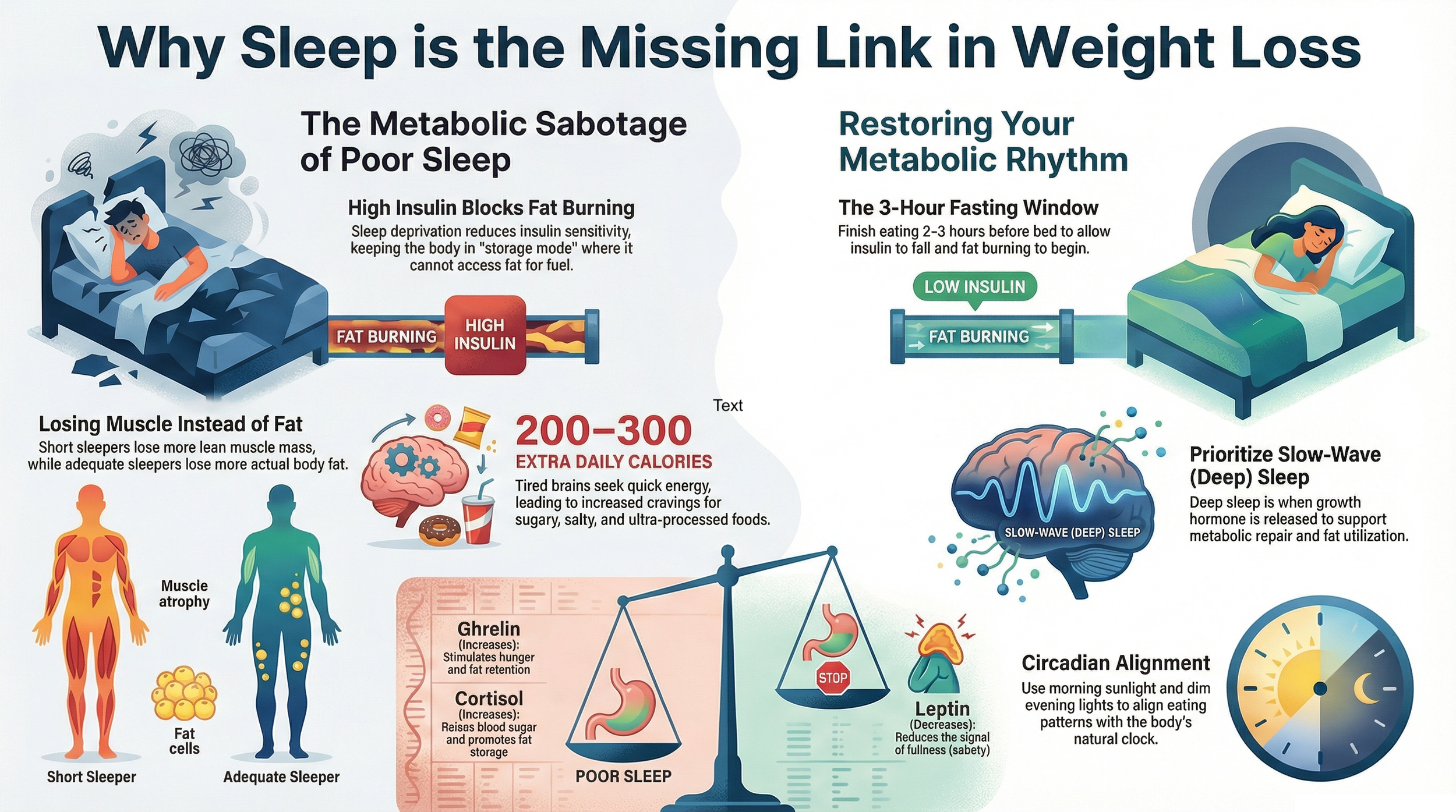
On the left is what poor sleep does to our metabolic health and on the right are some things to help improve metabolic rhythm. Sleep is the missing link in weight loss.
The Takeaway
Weight loss is not just about eating less and exercising more. It is deeply influenced by sleep, hormones, and circadian biology.
Without adequate, high-quality sleep, insulin regulation suffers, cravings increase, fat burning is suppressed, and the body is pushed toward storage rather than healing. Supporting sleep is not an optional add-on, it is a foundational pillar of sustainable metabolic health and long-term weight regulation.
Sometimes the most effective step forward isn’t doing more—it’s sleeping better.
If you’re struggling with your metabolic health or weight and live in Ontario, you’re welcome to reach out to schedule a complimentary 15-minute consultation to explore whether naturopathic medicine may be a good fit for you.
In health,
Dr. Barb Woegerer, ND
