
Magnesium: 5 Key Facts You Need to Know
Magnesium is one of the most overlooked minerals in modern healthcare, yet it plays a role in nearly every major system in the body. From energy production and brain function to hormone balance and bone health, magnesium is foundational to how we feel and how well we function.
Despite this, the majority of people are not getting enough.
It is estimated that up to 80% of adults are magnesium deficient, often without realizing it. Symptoms can be subtle at first—fatigue, poor sleep, muscle tension, headaches, anxiety, constipation—but over time, low magnesium can contribute to much deeper imbalances.
Below are five evidence-informed facts everyone should understand about magnesium, why deficiency is so common, and how to properly assess your status.
1. Magnesium Is Essential for Nearly Every System in the Body
Magnesium is a true workhorse mineral.
Approximately:
60% of magnesium is stored in bones and teeth
40% is found inside cells
Less than 1% circulates in the blood
This matters because magnesium does most of its work inside cells, where it helps regulate:
Energy production (ATP)
Muscle contraction and relaxation
Nerve signaling
Heart rhythm
Blood pressure regulation
Blood sugar control
DNA and RNA synthesis
Hormone signaling
Stress response
For many years, magnesium was thought to be involved in about 300 enzymatic reactions. Newer research suggests that number may be closer to 600–800 biochemical reactions.
In clinical practice, this explains why magnesium deficiency can show up in so many different ways: sleep problems, anxiety, PMS, headaches, blood sugar dysregulation, chronic fatigue, muscle pain, irregular heartbeat, digestive issues, and more.
Magnesium is also an essential mineral, meaning your body cannot make it. You must obtain it from food or supplements.
A helpful analogy is this: magnesium is like fuel for your cells. If you consistently run on low fuel or poor-quality fuel, your body cannot perform optimally, no matter how well designed it is.
2. The Current RDA for Magnesium Is Likely Too Low
The current recommended dietary allowance (RDA) for magnesium is:
300–320 mg/day for adult women
400–420 mg/day for adult men
However, these values were last updated in 1997.
They were based on average body weights at that time:
135 lbs for women
165 lbs for men
Today, average body weights are significantly higher, and magnesium requirements scale with body mass.
A 2021 analysis proposed adjusting magnesium needs based on current averages, which increased daily requirements by over 200 mg per day for many adults.
At the same time, dietary surveys show that the average person consumes only about 215 mg of magnesium per day.
This creates a significant daily gap, often 200–300 mg below true physiological needs.
To put that into perspective:
That shortfall is more than what is found in most multivitamins
It is roughly double what many people consume from food
Over time, this chronic shortfall quietly depletes cellular magnesium stores.
3. Magnesium Is Required to Activate Vitamin D
Vitamin D is critical for:
Calcium absorption
Bone density
Immune regulation
Mood balance
Metabolic health
But vitamin D cannot function properly without magnesium.
Magnesium is required to:
Convert vitamin D into its active form in the liver and kidneys
Transport vitamin D into cells
Regulate enzymes that prevent vitamin D excess
Without adequate magnesium:
Vitamin D remains poorly activated
Blood calcium levels may rise inappropriately
Calcium may be pulled from bones
Calcium may deposit into soft tissues such as arteries
This means:
You can have “normal” vitamin D levels on a blood test and still experience symptoms of vitamin D deficiency if magnesium is low.
Magnesium and vitamin D work as a biological partnership:
Magnesium activates vitamin D
Vitamin D improves magnesium absorption and retention
This is one of the reasons both deficiencies commonly coexist.
4. Magnesium Deficiency Is Driven by Modern Life
Magnesium deficiency is often called a silent epidemic.
While low intake from processed food and mineral-depleted soil plays a role, many other factors actively drain magnesium from the body.
Major Magnesium Depleters
Chronic stress
Stress increases urinary magnesium loss while simultaneously increasing magnesium demand, creating a vicious cycle.
Medications
By age 60, the average adult takes more than two prescription medications. Many common drugs interfere with magnesium absorption or increase excretion.
Insulin resistance and type 2 diabetes
Reduced cellular uptake and increased urinary loss make deficiency more likely. Only a small percentage of adults are currently metabolically healthy.
High sugar intake
Processing sugar requires significant magnesium. Frequent intake rapidly depletes stores.
Excess calcium intake
High calcium intake (from supplements or heavy dairy consumption) competes with magnesium absorption and increases magnesium requirements.
High-dose vitamin D supplementation
Vitamin D and magnesium use the same enzymatic pathways. Large doses of vitamin D over time can worsen magnesium deficiency.
Poor gut health
Conditions such as IBS, celiac disease, Crohn’s disease, low stomach acid, food sensitivities, parasites, and dysbiosis impair magnesium absorption.
Fluoride exposure
Fluoride binds magnesium, making it unavailable for biological use. Sources include drinking water, dental products, and some medications.
When these factors are not addressed, supplementation alone may provide limited benefit.
5. Most Magnesium Blood Tests Miss Deficiency
Serum magnesium testing measures magnesium in the blood.
However:
Serum magnesium represents less than 1% of total body magnesium
The body tightly regulates blood levels to protect heart and nerve function
Levels may appear “normal” even when cellular stores are depleted
Because magnesium is primarily an intracellular mineral, better testing options include:
Red blood cell (RBC) magnesium
Other intracellular mineral assessments
RBC magnesium reflects longer-term tissue status and provides a more meaningful picture of deficiency.
Clinically, optimal levels tend to fall toward the upper end of the laboratory reference range, not merely within “normal.”
Testing should always be interpreted alongside symptoms, lifestyle factors, and other lab findings to guide appropriate intervention.
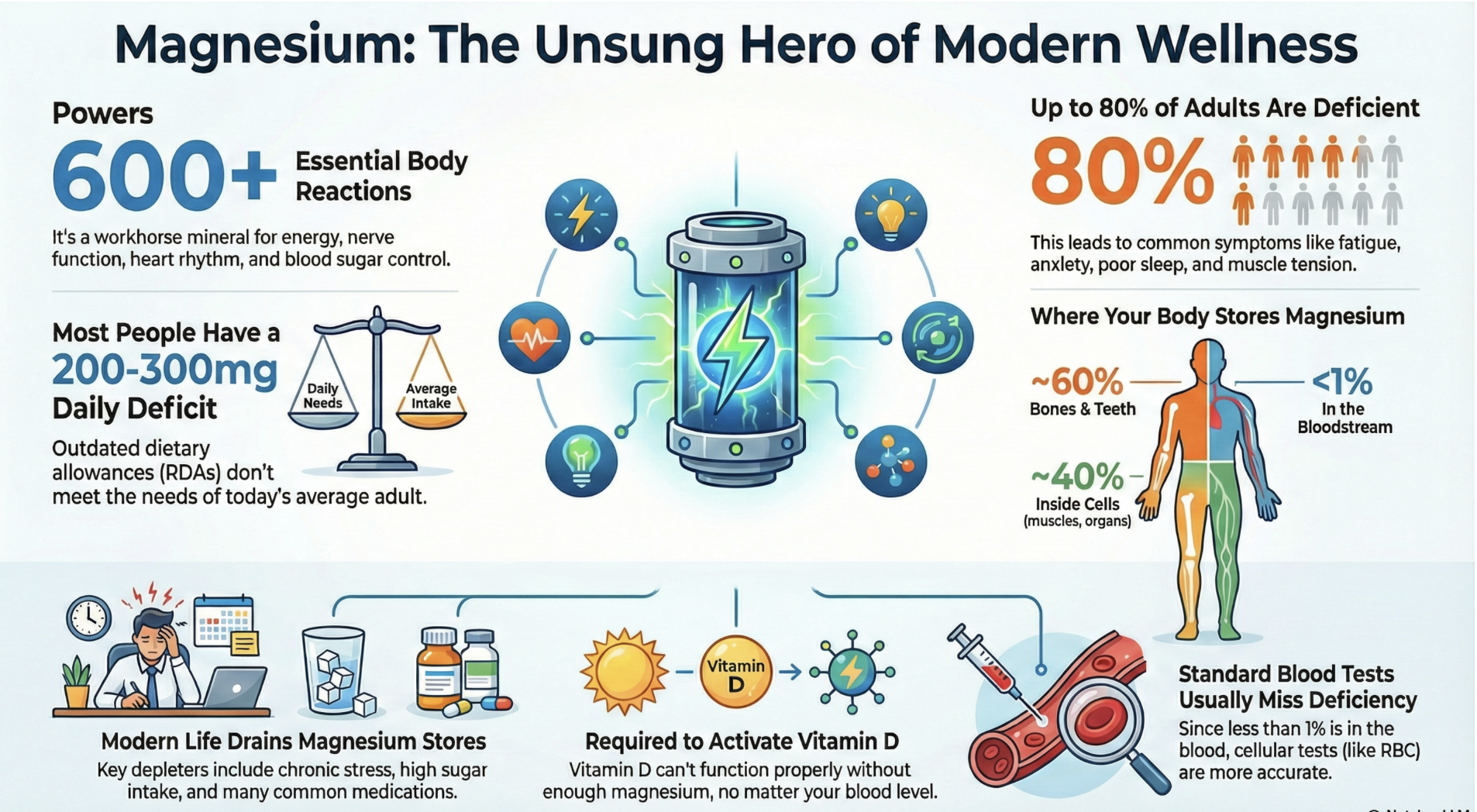
Summary of Key Facts of Magnesium
The Bottom Line
Magnesium is not a minor nutrient.
It is central to:
Cellular energy
Nervous system balance
Hormone regulation
Bone integrity
Blood sugar control
Cardiovascular health
Stress resilience
Sleep quality
When magnesium is low, the body cannot adapt well to stress, aging, inflammation, or metabolic strain.
Correcting deficiency is often one of the most powerful foundational steps in restoring overall health.
Magnesium truly is one of the unsung heroes of modern wellness.
Want to Learn More?
If you’re ready to take your magnesium knowledge further, my book Mastering Magnesium is a complete guide to understanding which forms of magnesium work best for different health needs, because not all magnesium is created equal. Some forms are ideal for relaxation and sleep, others for digestion, energy production, or muscle support. Knowing the right type for your body can make all the difference.
In addition, the book includes over 40 magnesium-rich recipes designed to help you naturally boost your intake through delicious, wholesome meals and snacks. From easy everyday meals to treats that support your nervous system and overall wellness, it’s a practical guide to making magnesium a part of your life, without relying solely on supplements.
→ Explore the full guide to magnesium forms, benefits, and recipes here
In health,
Dr. Barb Woegerer, ND
Educational content only. Not a substitute for individualized medical care. Always consult your licensed healthcare provider before starting supplements or changing treatment plans.
